I Don’t Believe Hotel Rooms Are Just Places to Sleep
In a world where we as travelers are so overwhelmed by choices, I believe the modern hotel room must do more than look beautiful, it must feel intentional.
This modern luxury guestroom was imagined as an urban sanctuary: a place where the intensity of the city dissolves the moment you cross the threshold. The architecture softens immediately. Curves replace corners. Surfaces flow rather than divide. The room doesn’t just house the guest, it gently embraces them.
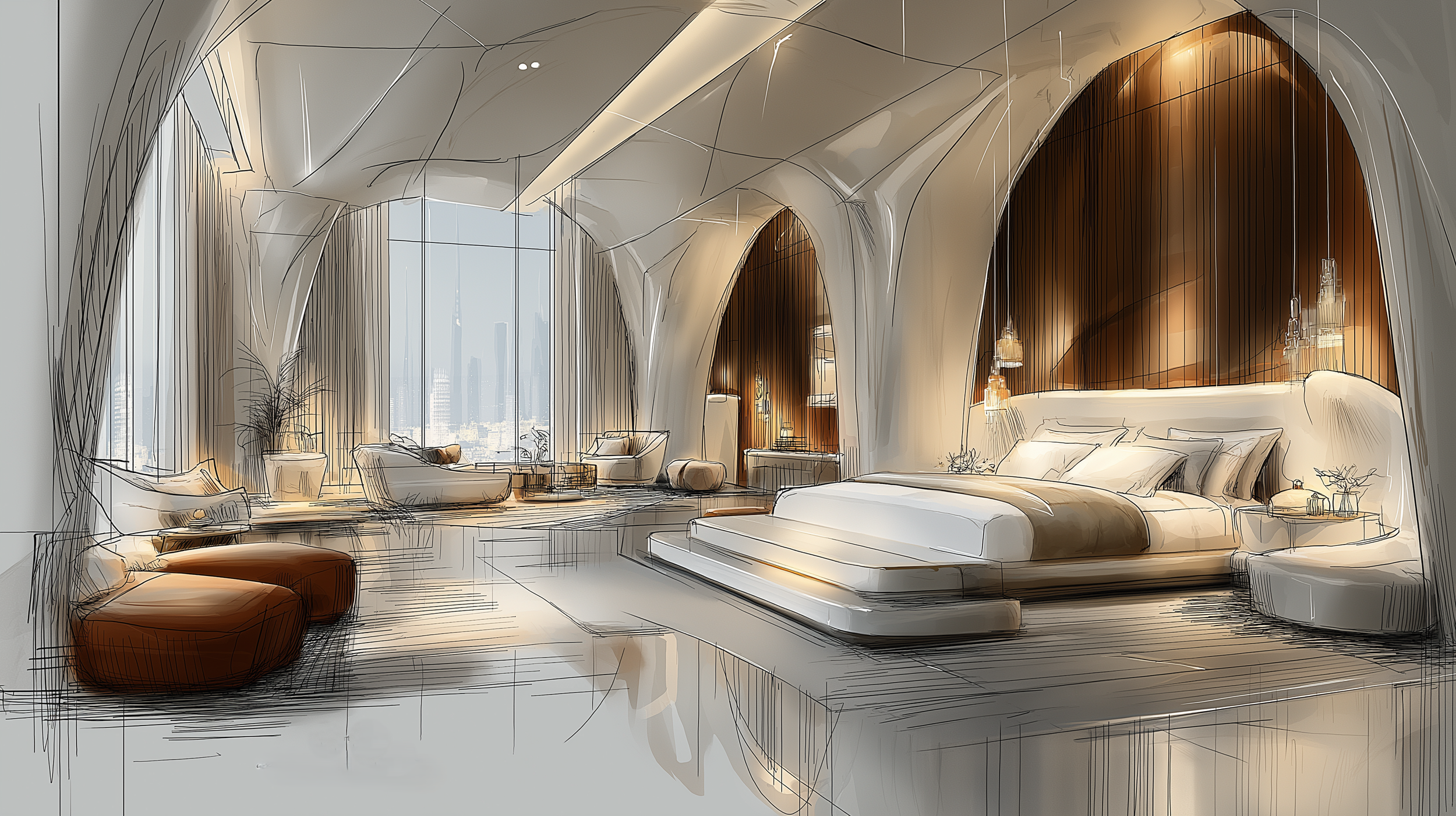
I designed this space around the idea of organic luxury. Not luxury as excess, but luxury as calm, proportion, and emotional intelligence. The sculptural arches frame moments within the room: sleep, reflection and conversation, creating subtle zoning without walls. For hotel developers, this means flexibility: a generous suite experience that still feels cohesive and efficient. For operators, it means a room that works hard without shouting.
Materiality does the storytelling. Warm wood tones anchor the space and counterbalance the urban skyline beyond the glass. Soft, layered lighting replaces the traditional grid of downlights, creating an atmosphere that shifts effortlessly from day to night. This is a room that photographs beautifully, but more importantly, it lingers in your memory. That’s what drives return stays.
The bed is intentionally elevated and sculpted as a centerpiece, not an afterthought. It signals rest as a ritual. Surrounding lounge elements invite guests to stay in, to work, to pause, to order room service without guilt. In an era where hotels compete with homes, this room confidently says: you don’t need to leave.
From a commercial perspective, designs like this answer a critical question I hear again and again from hotel leaders: How do we differentiate without alienating?
The answer is emotional clarity. Spaces that feel intuitive, sensorial, and quietly distinctive. Rooms that appeal equally to the business traveler, the creative, and the luxury-seeker without redesigning the entire asset in five years.
This is not a room designed for trends.
It’s designed for longevity, loyalty, and experience-led value.
And ultimately, that’s where the future of hospitality lives.