Design for Belonging: Why Luxury Hospitality Must Create Connection, Not Just Privacy
What if one of the highest-return investments in your hotel isn't another amenity, but a greater sense of belonging?
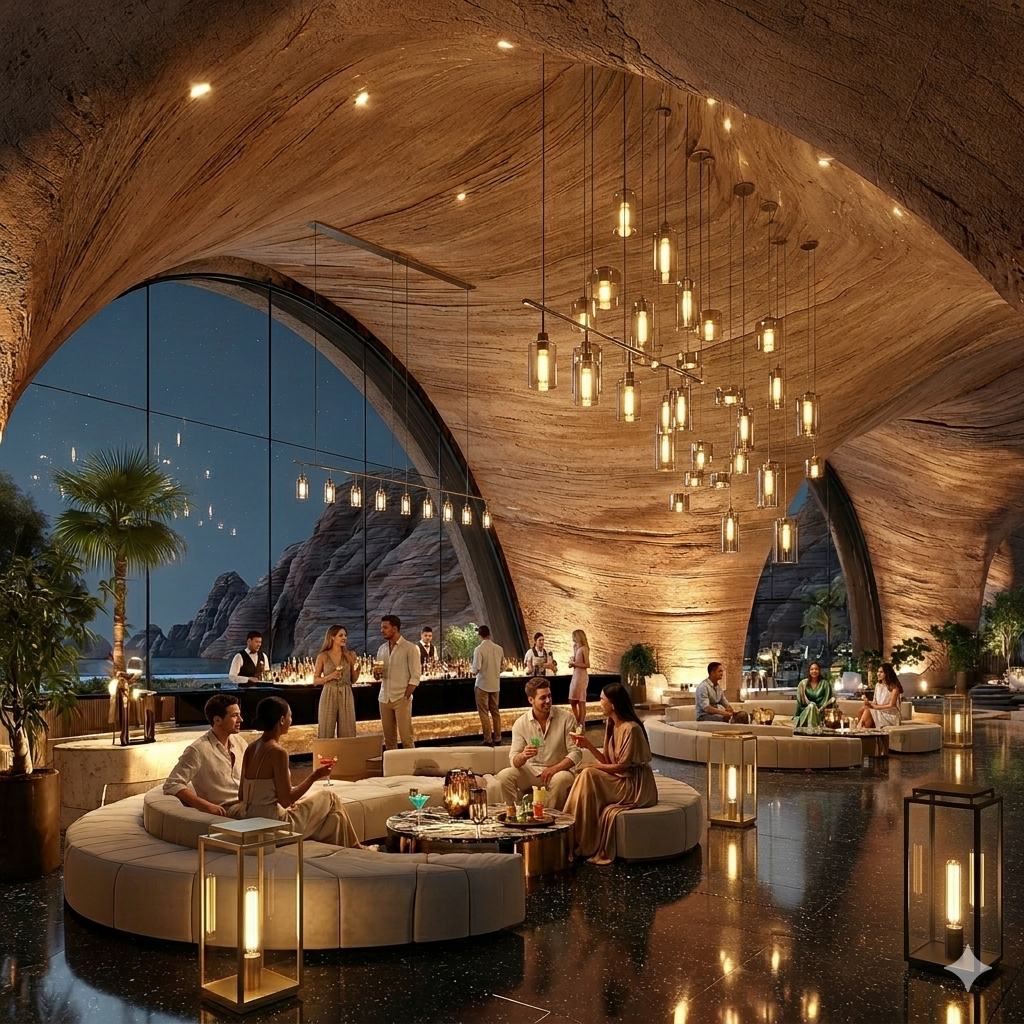
Concept design for a desert hotel
Luxury hospitality has spent decades perfecting privacy. Yet today's guests increasingly value something that can't be purchased as an upgrade: genuine human connection. The hotels that create places where guests naturally gather, interact, and feel they belong are building something far more valuable than memorable stays; they're building lasting emotional loyalty.
For much of my career, luxury hospitality has been defined by exclusivity and privacy. We have created private villas, secluded spas, exclusive lounges, and intimate suites that allow guests to escape the demands of everyday life. Those experiences remain incredibly important, and there will always be travelers seeking peace, solitude, and personal space.
Yet over the past several years, I have noticed something else:
Many guests are not simply looking to disconnect from the world. They are looking to reconnect: with family, with friends, with nature, and sometimes even with complete strangers. In a world where people have never been more digitally connected, genuine human connection has become surprisingly rare.
Perhaps that is one of the greatest opportunities luxury hospitality has today.
As designers, we often think about how people move through a hotel, how they arrive, how they experience a guestroom, or how they transition from one space to another. Increasingly, I find myself asking a different question:
Where will guests meet?
Not because they have to, but because the environment naturally encourages it.
The most memorable hotels rarely rely on programmed entertainment to create community. Instead, they provide spaces that make interaction feel effortless. A beautifully proportioned communal table. A library where guests linger over coffee. A sculptural fire pit that draws people together as the sun sets. A chef's table, a tea ceremony, a morning wellness ritual, or an evening champagne celebration that quietly becomes part of the hotel's identity.
These experiences cannot be manufactured.
They emerge because the design creates the right conditions.
One of the most fascinating aspects of hospitality design is that we are not only shaping physical environments - we are shaping human behavior. The placement of furniture, the scale of a room, the relationship between indoor and outdoor spaces, even the choreography of arrival all influences whether people remain isolated or feel comfortable engaging with those around them.
The finest luxury hotels understand this instinctively. Their lobby is far more than a reception space; it becomes the living room of the resort. Their bar evolves into a social anchor where conversations unfold naturally. Their wellness spaces become communities centered around renewal rather than simply treatment rooms.
None of this happens by accident. It is carefully considered, yet it never feels designed.
From a developer's perspective, these moments create something extraordinarily valuable. When guests form emotional connections: not only with the destination, but with the people they met and the experiences they shared, they create memories that extend well beyond the physical product. Those memories inspire repeat visits, stronger guest loyalty, and enthusiastic word-of-mouth that no marketing campaign can replicate.
This is why I believe belonging is becoming one of the next frontiers of luxury hospitality.
Not every guest is searching for greater privacy.
Some are searching for a place where they immediately feel welcome. A place where conversation happens naturally. A place where they feel part of something, even if only for a few days.
Perhaps the greatest luxury we can design is not simply giving guests a beautiful room.
Perhaps it is giving them a place where they truly feel they belong.
As our industry continues to evolve, I believe the hotels that will create the greatest long-term value will not simply be those with the most impressive architecture or the largest collection of amenities. They will be the ones that understand a timeless truth about hospitality:
People may arrive for the destination, but they return because of how the experience made them feel - and often, because of the connections they made along the way.
How do you see luxury hospitality evolving? Will the next generation of great hotels be remembered more for their architecture, or for the communities and human connections they inspire?