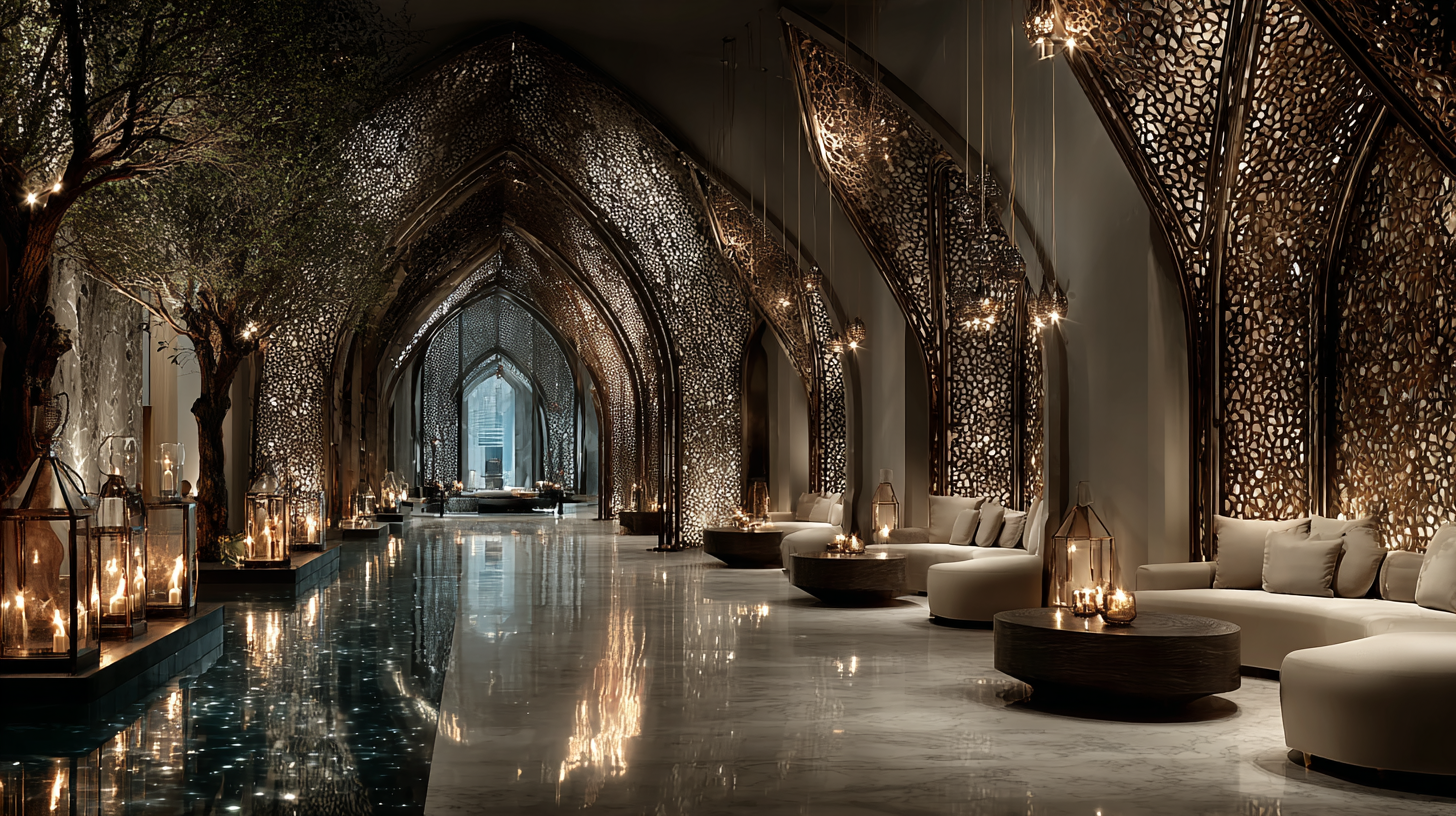
A Spa Arrival as Sensory Immersion
The hotels we remember most are rarely the ones with the most elaborate finishes, the largest lobbies, or the longest list of amenities. They are the ones that made us feel something.
Before a guest consciously evaluates the architecture, service, or room, the body has already begun interpreting the experience. The quality of the light, the temperature of the air, the rhythm of the music, the scent at arrival, the texture beneath the hand, and the transition from energy to stillness are all quietly shaping perception.
This is the power of sensory immersion.
It is not about overwhelming guests with stimulation. It is about creating a carefully orchestrated sequence of sensory moments that makes the hotel feel distinct, emotionally resonant, and inseparable from its destination.
Sensory Design Is More Than Atmosphere
Too often, sensory design is approached as a collection of decorative layers added toward the end of a project: a signature fragrance, a curated playlist, dramatic lighting, or a memorable art installation.
But true sensory immersion begins much earlier. It starts with the fundamental questions and creating a concept narrative:
How should guests feel as they arrive?
What should happen to their breathing as they enter the lobby?
When should the hotel become energetic, intimate, celebratory, or quiet?
What sensory memory should remain long after they leave?
Once those emotional intentions are established, architecture, interiors, landscape, lighting, acoustics, food, wellness, technology, and service can work together to create a unified experience. The result is not simply a beautiful hotel. It is a hotel with an identity guests can feel.
The Arrival Should Change the Guest’s State
The arrival experience is the first opportunity to separate guests from the world they have just left behind.
A subtle change in temperature, the sound of moving water, the scent of native planting, softened acoustics, or a gradual transition from bright daylight into a more intimate interior can create an immediate sense of release.
This moment does not need to be theatrical. The objective is transformation.
A successful arrival allows the guest to move from travel to presence, from anticipation to belonging, and from the pace of everyday life into the emotional world of the hotel.
Every Sense Should Support the Same Story
Sensory immersion becomes memorable when every element reinforces a shared narrative.
In a desert resort, the experience might be shaped by filtered sunlight, mineral textures, cooling water, aromatic desert botanicals, deep shade, and the distant sound of wind. In a coastal hotel, it might emerge through salt air, shifting reflections, natural fibers, open horizons, and the rhythm of the sea.
The goal is not to use every sensory opportunity everywhere. When too many elements compete for attention, immersion becomes distraction. The most sophisticated hotels understand how to edit.
They create moments of intensity followed by moments of calm. They allow sound to become silence, compression to become openness, shadow to become light, and social energy to give way to privacy. This contrast gives the guest journey rhythm. You can compare it to being the conductor of an orchestra, and each piece of music performed having its own personality and differentiated emotional impact.
Sensory Immersion Must Be Operationally Authentic
For hotel managers, the success of a sensory concept depends on whether it can be maintained consistently throughout daily operations.
A beautiful idea loses its power if music levels vary unpredictably, lighting scenes are not calibrated, fragrances become overpowering, water features are frequently inactive, or material selections cannot withstand real guest use.
Sensory design must be translated into operational standards.
Lighting should adapt to the time of day. Acoustic conditions should support both atmosphere and conversation. Fragrance should be subtle, localized, and appropriate to the guest profile. Materials should be tactile but durable. Service rituals should feel natural enough to be delivered with sincerity rather than performed as a script.
The design team and hotel operator must choreograph these elements together from the beginning.
When sensory intentions are embedded into operations, the experience remains alive long after opening day.
Why This Matters to Developers
In an increasingly competitive hospitality market, physical luxury alone is no longer enough to create meaningful differentiation.
Guests may forget the exact finishes used in the lobby, but they will remember the feeling of entering it. They will remember the scent of the garden after sunset, the sound of water outside their room, the warmth of the lighting at dinner, or the quiet that allowed them to sleep more deeply.
These memories influence how guests describe the hotel, whether they share it, whether they return, and whether they develop an emotional connection to the brand.
Sensory immersion can therefore become a form of commercial value.
It strengthens positioning, creates distinctive marketing content, supports premium rates, encourages repeat visitation, and makes the property more difficult for competitors to imitate. Finishes can be replicated. Amenities can be matched. But a deeply integrated emotional experience is far harder to reproduce.
Designing What Guests Will Remember
The future of hospitality will not be defined by how much stimulation we can place in front of the guest.
It will be defined by how intentionally we choreograph attention.
The opportunity is to create hotels that do more than look extraordinary in photographs: hotels that change with the morning light, soften at dusk, become intimate at night, and reveal themselves through sound, scent, texture, taste, temperature, and movement.
When every sense contributes to a coherent emotional story, design moves beyond aesthetics.
It becomes atmosphere.
It becomes memory.
And ultimately, it becomes the reason a guest chooses to return.