A Life in Design - the Path I Never Imagined
From a thatched house in Denmark to immersive worlds across continents, a memoir of restlessness, reinvention, and learning to design human experience.
Long before I understood architecture, I understood that a place could possess a soul.
The House That Taught Me to See
I grew up in Denmark in a beautiful, 200-year-old timber-framed house with a thatched roof. Fine-art painters came often to paint it, setting up their easels to capture the uneven timbers, the softness of the roof, and the way the house belonged to the landscape. I was very young, but I knew they were not painting it merely because it was picturesque. They were responding to something they felt.
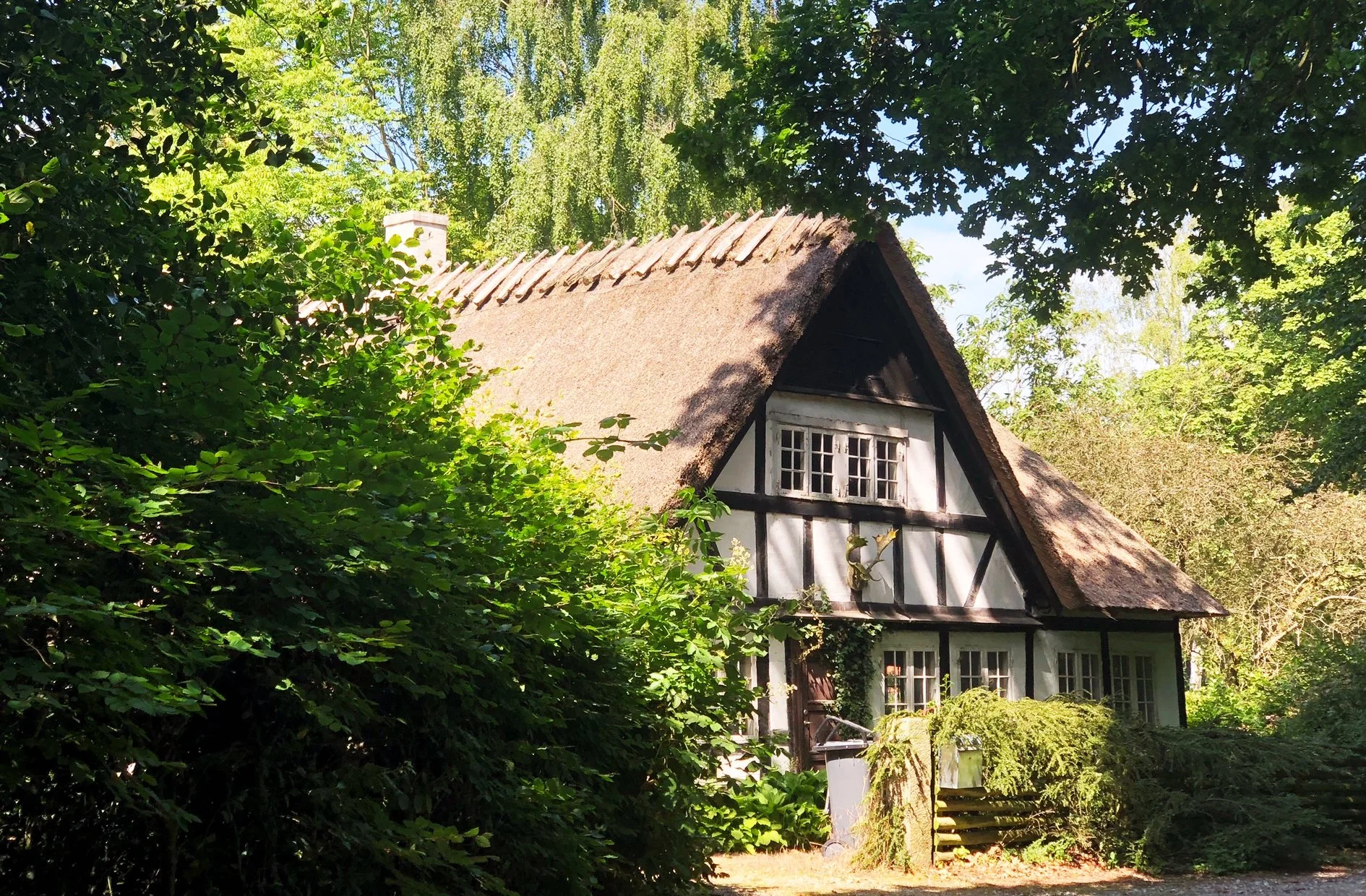
The house that taught me to see
Perhaps that house was my first education in design. It taught me that age could become beauty, that imperfection could become character, and that architecture could hold memory long after the people who created it were gone.
I was always drawing. By the age of eight, I was winning drawing competitions, and I filled my imagination with sketches of clothes, characters, and worlds of my own invention. I loved fashion and the freedom of creating it, but even then I was troubled by its transience. A dress might be worn only a few times. I wanted to make something more enduring - something people could inhabit, remember, and perhaps pass on.
I wanted to become an architect.
Our high-school dean repeatedly told us, "I sincerely hope none of you will study architecture. They are all Marxists." It was hardly the most conventional form of career guidance, but it did nothing to discourage me. Architecture was exactly what I intended to study.
People assumed that, as a young woman, I would choose interior design, decoration, or window display. I resisted the assumption more than the disciplines themselves. I did not want my ambitions defined by what a woman was expected to do. I wanted to shape buildings, cities, and the enduring framework of people's lives.
An Education Without a Map
The School of Architecture in Denmark offered an education that would be almost unimaginable today. There was no prescribed curriculum and no orderly sequence of examinations. On our first day, we received two handbooks: one describing the departments, professors, and their philosophies; the other listing the courses available to us. From there, we designed our own education.
We chose our professors, defined our projects, and selected courses according to what each exploration required. When we believed we were ready - usually after five years - we presented the full body of our student work including the final thesis project to a committee of professors and asked to graduate.
I was in heaven.
Freedom suited me, but it was not gentle. It demanded curiosity, discipline, and the ability to recognize what one did not yet know. Some students could not organize their own studies; others simply did not work hard enough. After five years, a few were told they did not have the talent to graduate. The school did not protect us from judgment. It required us to construct an intellectual and creative life for ourselves.
That experience established a pattern I would repeat throughout my career: I learned most when there was no clear path in front of me.
“I learned most when there was no clear path in front of me”.
While still a student, I began entering national architectural competitions. My first entry, for a city hall, won third prize. During a semester break, an architect hired me to help design an invited competition for a national concert hall. We won that one. After my city hall success, my professor encouraged me to begin my thesis, and I graduated a year earlier than usual - while also helping my boyfriend complete his own thesis.
Competitions became my private laboratory. They allowed me to propose an idea before anyone had given me permission to have it. They demanded speed, conviction, and the willingness to risk public failure. I loved them.
The Accident of Becoming
My first professional reinvention happened almost by accident: I became a landscape architect because I could draw trees, plus my father was a forest manager.
It was not the career I had imagined, but it expanded the scale of my thinking. Buildings no longer stood alone. They belonged to land, infrastructure, movement, and the larger patterns of a city. I helped the firm win urban design and architectural competitions and contributed to design the Great Belt suspension bridge, an extraordinary project that would include what was Denmark's longest suspension span. At night and on weekends, I continued entering competitions on my own - and won quite a few.
By 1980, at 27, I had already done many of the things a young architect is supposed to spend years hoping to do. I had graduated early, won competitions, and worked on projects of consequence. Yet achievement produced an unexpected emotion: impatience.
Professional success was no longer enough. I wanted a life large enough to change the way I saw the world.
So, I ended a seven-year relationship and accepted an expatriate position in Tanzania with the Danish government. Part of me wanted to prove to my boyfriend - and perhaps to myself - that I could live without him in one of the most difficult countries in the world.
I was assigned to help design the Solomon Mahlangu Freedom College for the African National Congress, the South African liberation movement. The students had fled apartheid after the Soweto uprisings. Architecture, which had until then been a field of ideas and ambition, was suddenly inseparable from exile, politics, scarcity, and human survival.
Living among refugees changed me. I listened to their stories, witnessed their determination, traveled through Tanzania, and contracted malaria five times. I also probably overdesigned some of the college buildings. I was still young enough to believe that every project needed to carry the full weight of my architectural ambition.
Africa taught me otherwise. Design could not be separated from resources, climate, culture, or the reality of the people who would live with its consequences. It was not simply a professional assignment. It was the life experience I had gone looking for.
Returning, but Not Coming Home
After 26 months, and turning 30, I returned to Denmark. The landscape was familiar, but I no longer fit comfortably within it. I had left as one person and returned as another.
I joined Henning Larsen's office - he was considered Denmark's leading architect at the time - and worked on the Ministry of Foreign Affairs in Riyadh. Henning later recommended me to Bornebusch, which needed someone to design an invited international competition for a large urban design project in Regensburg, Germany.
We won.
For three years, I traveled back and forth to Germany, meeting with city planners and developing design guidelines that would allow both us and other architects to contribute individual buildings without losing the coherence of the larger vision. The development was expected to take ten years. Then the wall between East and West Germany came down, history changed the pace of the project, and it was built far more quickly.
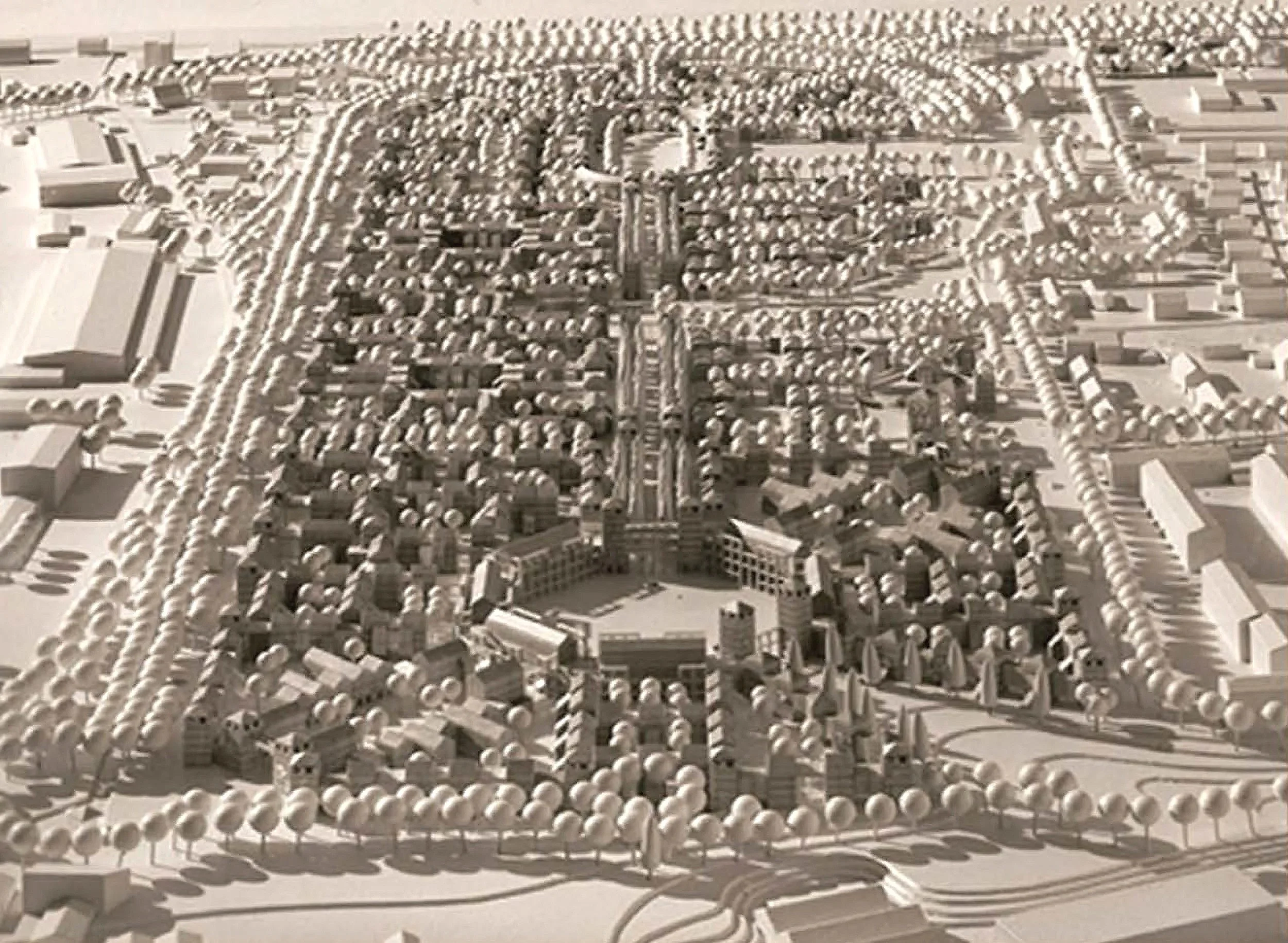
Rennplatz Regensburg - a model of the urban design competition
It was serious, important work, and still I grew restless. My classical architectural background had brought me success, but success can become its own kind of confinement. I knew how to do what I was doing. That was precisely the problem.
“I wanted to unlearn my own competence.”
At the Städelschule in Frankfurt, Professor Peter Cook had selected 22 postgraduate architects from around the world. The atmosphere was highly competitive, intellectually unruly, and exhilarating. I pushed myself away from the classical language that had served me so well and toward something more tactile, futuristic, and avant-garde.
At the same time, I was a guest professor at the Royal Academy of Architecture in Copenhagen. I traveled between Frankfurt and Copenhagen on night trains. One day, I stood before Peter Cook as a student, defending my work and having my assumptions dismantled. The next, I stood before my own students as the professor, asking them to risk more.
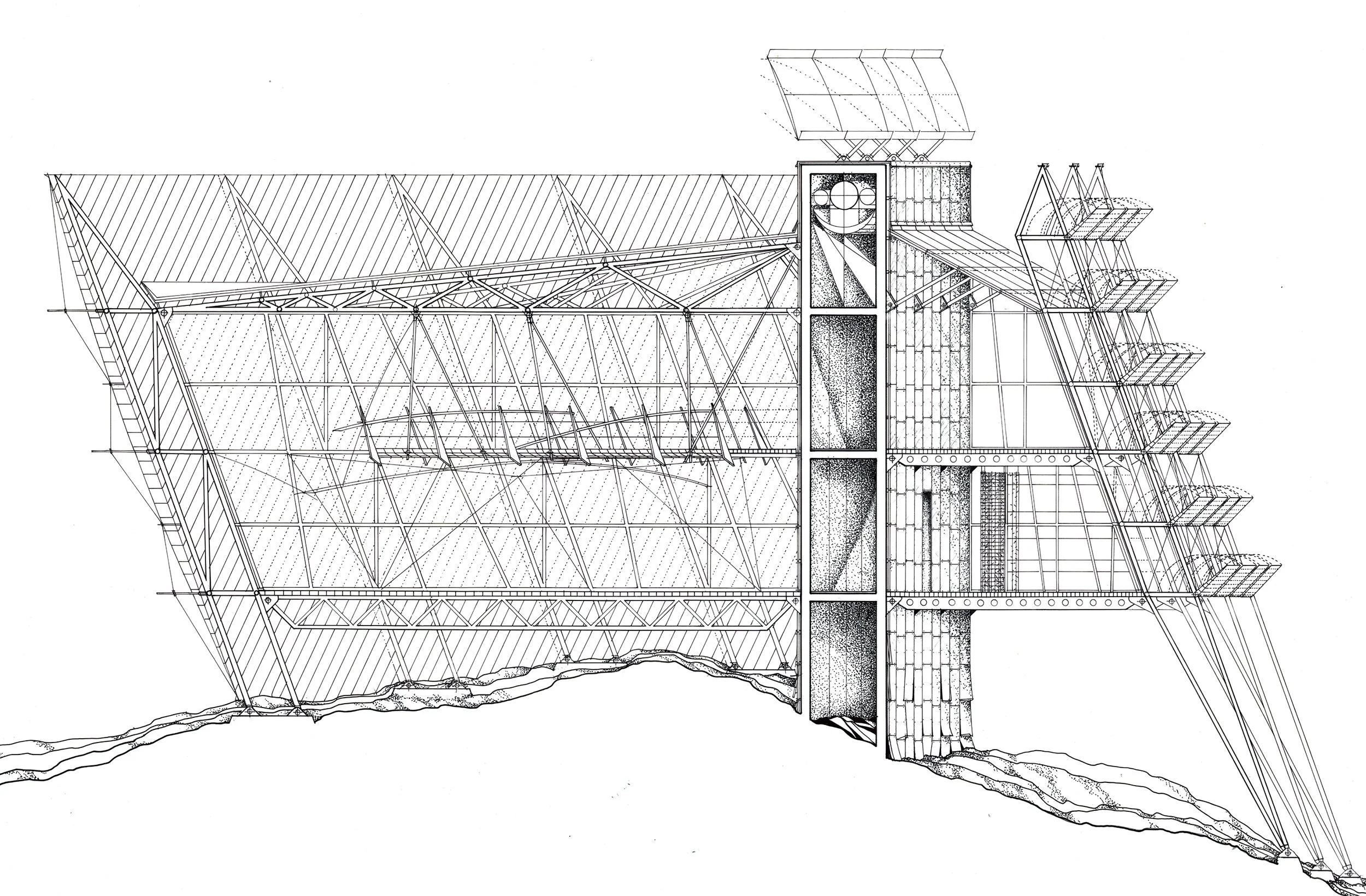
Weather Monitoring Station in Oslo, Norway
The duality was fascinating. Being reviewed made me more humane as a critic; reviewing others made me more rigorous about my own work. I began to understand that education is not the delivery of answers. It is the art of creating the conditions in which transformation becomes possible.
The following summer, I studied with Daniel Libeskind and Peter Eisenman at a symposium in Como, Italy, devoted to the "Being-Nonbeing of Architecture." We explored architecture through absence, memory, meaning, and philosophical uncertainty. It was abstract and, at times, almost impenetrable. It was also deeply inspiring.
Los Angeles: Architecture Becomes Performance
Peter Cook believed I should move to Los Angeles and arranged for me to develop my thesis at SCI-Arc. Los Angeles felt less like a city governed by architectural history than a place where reality itself was available for reinvention.
My thesis was avant-garde and choreographic. It explored how entertainment could manipulate the senses and how space could influence movement, anticipation, and emotion. I was beginning to see architecture not as a static object, but as something closer to a performance unfolding through time.
How do people enter? What do they see first? What is withheld? When does anticipation become surprise? Can a place alter a person's emotional state before they consciously understand what has happened?
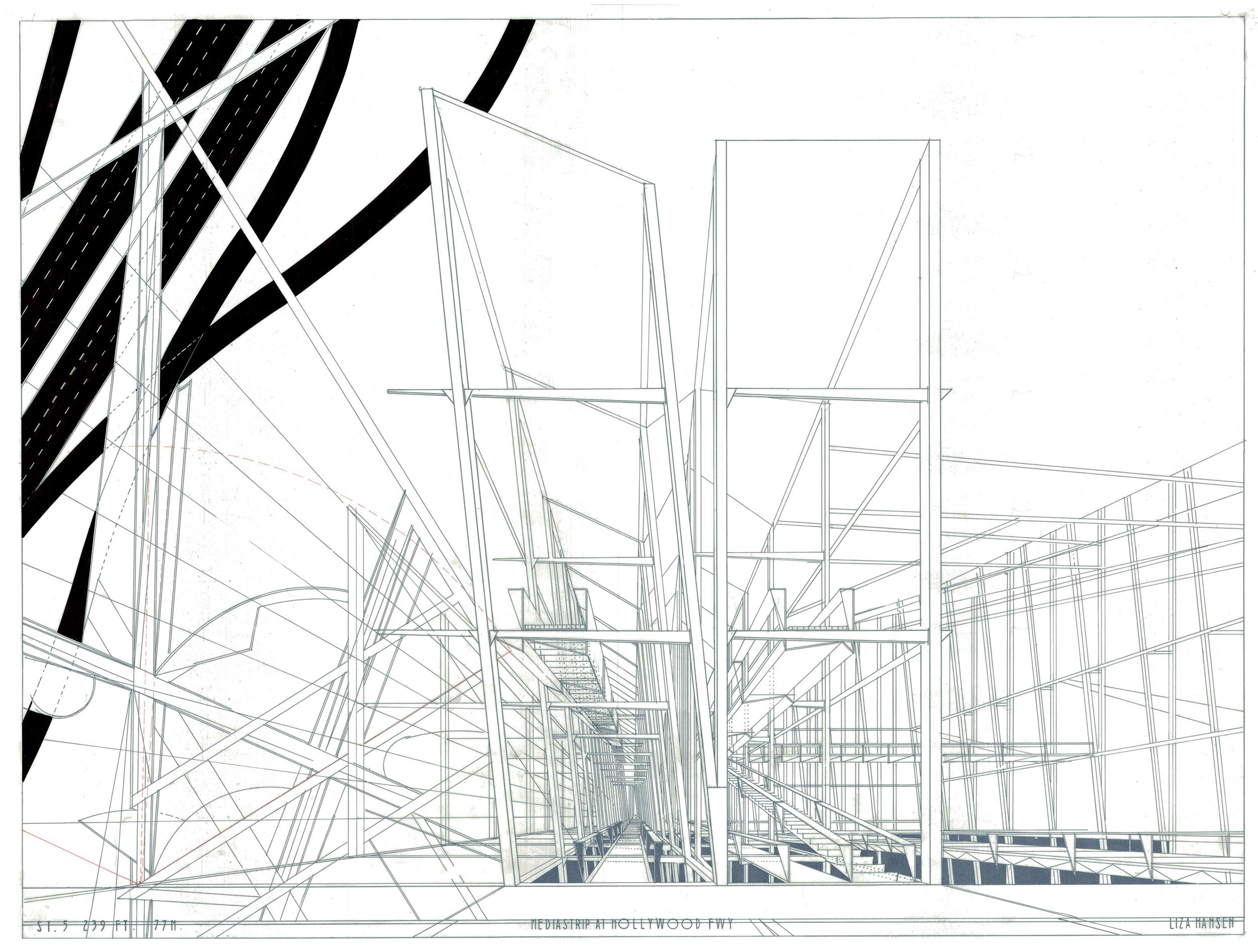
Mediastrip at Hollywood Freeway
I did not yet call this hospitality design. But the questions that would define my career were already there.
Immediately after my thesis, I began working for Frank Gehry. It was a dream. I worked on the Vitra Design Museum and Vitra's office headquarters in the Basel region of Switzerland, watching ideas move from instinctive sketches into physical models.
Frank often began with something as small as a napkin sketch. From there, the model shop became a place of almost relentless experimentation. Young designers, many from SCI-Arc, sometimes worked 100 to 120 hours a week. The energy was intoxicating, but the process depended upon Frank's personal engagement. No matter how close the deadline, a project sometimes had to wait until he was ready to touch it.
Only later did I understand the leadership lesson within that experience. A singular vision can give a project its power, but architecture is never made by one imagination alone. Vision must be protected without preventing the people around it from thinking, contributing, and moving the work forward.
After more than a year, I felt the familiar restlessness. I became an adjunct professor at USC, inspired by Peter Cook's inquisitive mind and by the challenge of helping young designers move beyond what they thought they could do. Teaching gave me time to study for my licensing examination. It also confronted me with the fragility of being a foreigner in America, where the continuation of a life and career could depend upon securing the next work visa.
Be Careful What You Wish For
A few years later, while working primarily on museums and public buildings, I visited Las Vegas for the first time.
I was fascinated by its creative permission. Casinos spent money to build immersive worlds because they understood that experience itself had value. Public buildings, by contrast, were often expected to look inexpensive so no one could accuse them of wasting public money - even when their materials might cost the same.
Perception, I realized, was everything.
Every so often, I caught myself thinking, "I wish I were designing casinos."
Be careful what you wish for.
A few months later, during a severe economic downturn, I was laid off. By chance, I was referred to a company that designed only casino interiors. Soon afterward, the company moved to Las Vegas. With architecture firms in Los Angeles still struggling through the recession, I followed. I told myself I would stay for one year and then return to Los Angeles.
Las Vegas had other plans for me. 16 years.
The transition was difficult. My training had been grounded in what I thought of as pure architecture: classical, experimental, futuristic, conceptual. Las Vegas was in the great era of thematic design. It required scale, flamboyance, illusion, and the courage to be emotionally direct.
“I had to learn to think like a filmmaker”
A guest did not experience a casino as a plan or an elevation. The experience unfolded through scenes: arrival, temptation, discovery, surprise, intimacy, spectacle, and memory. Lighting could conceal or reveal. Sound could draw someone forward. A corridor could build suspense. A threshold could announce that one world had ended and another was about to begin.
The ideas I had explored in Frankfurt, Como, and at SCI-Arc suddenly found a practical purpose. Architecture, interiors, theater, psychology, and storytelling could coexist within one experience. Hospitality gave me the canvas on which all of them could converge.
I also returned to teaching, this time at the UNLV School of Architecture. Once again, I moved between practice and education, challenging talented students and trying to awaken those who had not yet understood the discipline the profession would demand. After five years, the university told me I could practice architecture only eight hours a week and should devote the rest of my time to teaching and office hours.
For me, there was no decision to make.
I chose design.
From Casinos to Hospitality Worlds
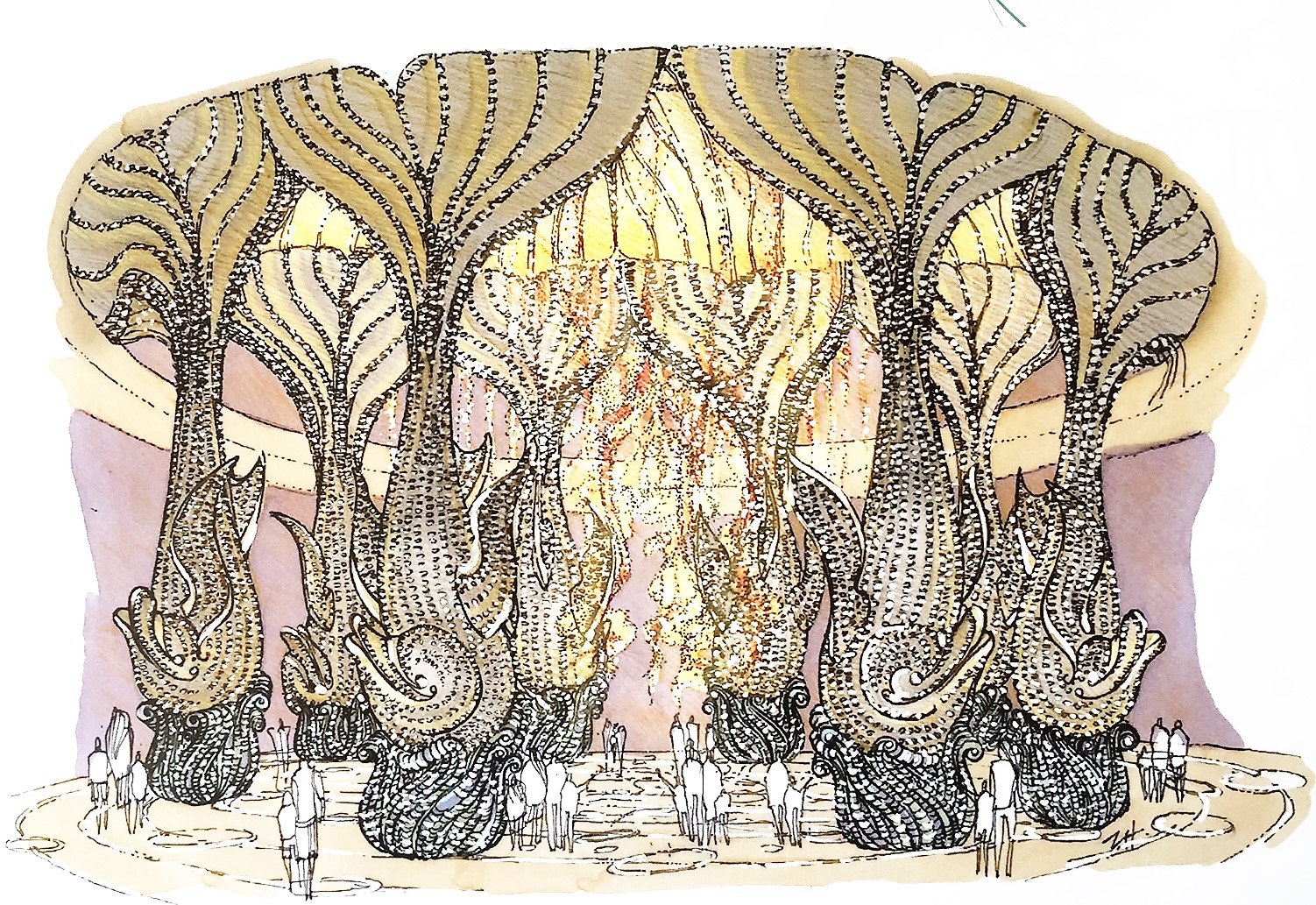
First concept sketch with body-surfing dolphins for the Dolphin Lobby at Hengqin Bay Resort, Zhuhai, China
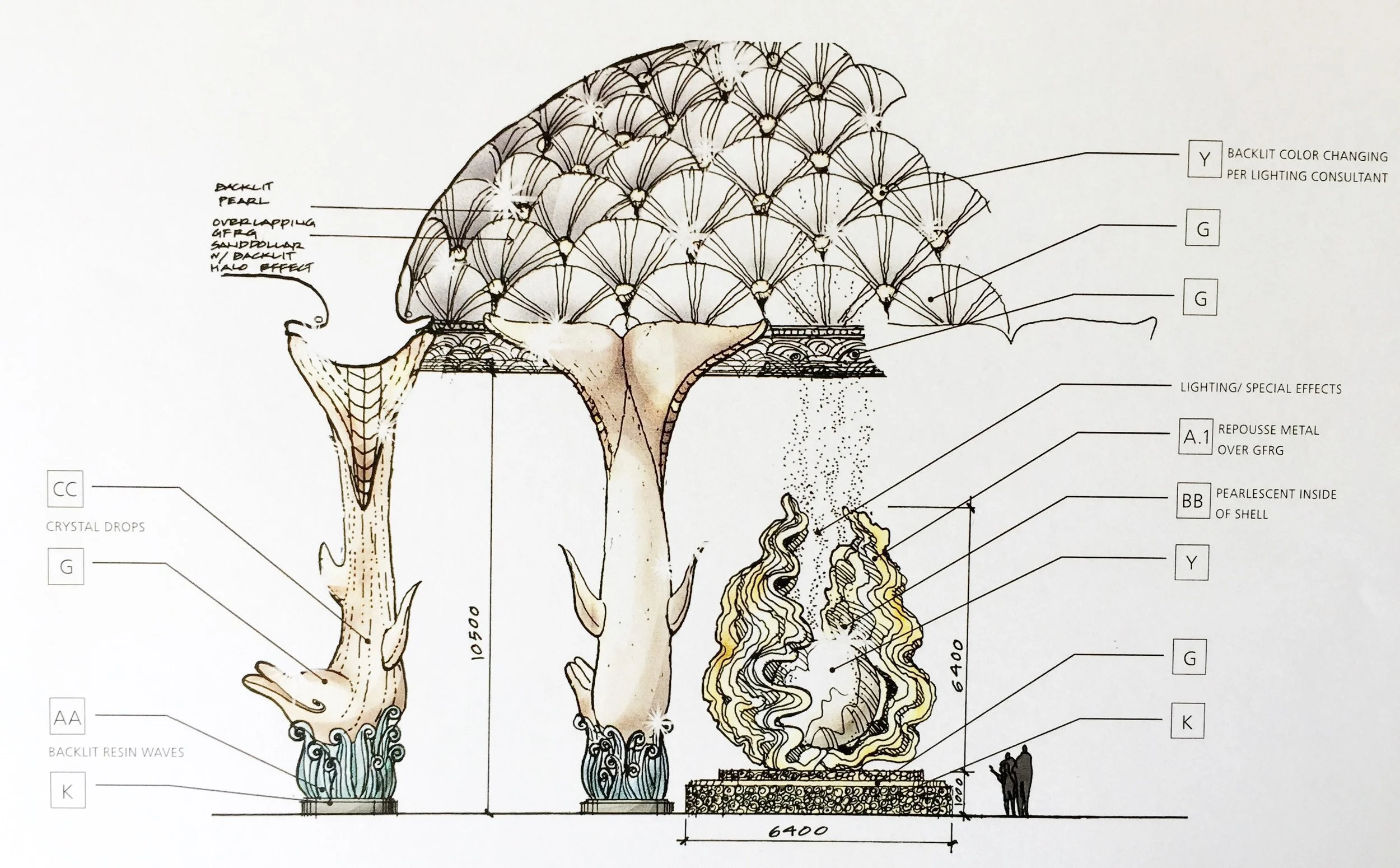
Detail sketch for dolphin columns & shell dome
I joined ABA, a more sophisticated luxury practice with a wider range of hospitality work. There, I began to understand the hotel not as a collection of rooms, but as a complete world: arrivals, restaurants, bars, guestrooms, spas, entertainment, service rituals, and emotional transitions, all contributing to a single memory.
After five years as Design Director, I started my own company. Projects arrived through WATG in Portugal, Madeira, and Costa Rica. Then another economic downturn arrived, and every contract was annulled.
The sudden silence was devastating. There was no income, but the office expenses remained. Ambition had helped me begin; survival demanded adaptability.
A four-month consultancy took me to Chengdu, where I worked long days and most weekends while sharing a hotel villa with three other designers. The schedule was punishing, but Sichuan opened another world to me: its landscapes, its famously spicy cuisine, and remote villages where some residents had never seen a blonde person. At five feet six inches, I was suddenly tall as well as foreign. Without intending to, I became a small local celebrity.
When I returned to the United States, WATG invited me to Irvine as a Senior Designer; I later became a Creative Director. We had purchased a weekend beach house in Newport Beach and eventually sold both of our Las Vegas houses to move back to California. Yet most of my work continued to pull me toward Asia.
The most extraordinary assignment was an ocean-themed mega-resort for Chimelong in Zhuhai, China: 1,888 guestrooms, a vast conference center, and ten restaurants. The chairman's mandate was uncompromising. Every wall, floor, and ceiling was to be ocean-themed.
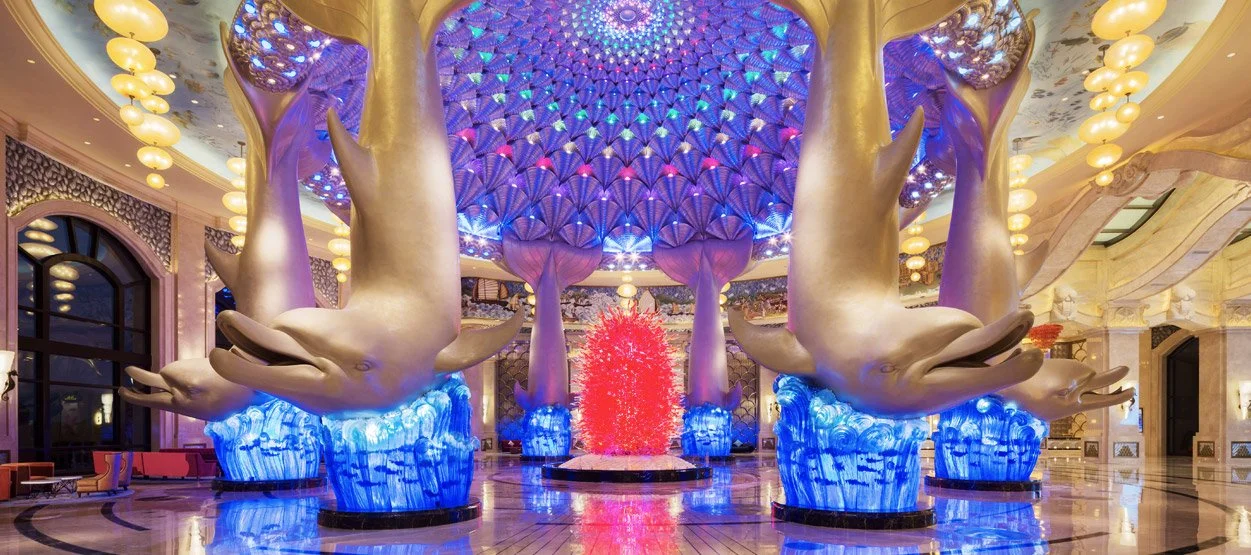
As built Dolphin lobby
The lobby became a palace held aloft by dolphins. Eight enormous columns transformed into body-surfing dolphins riding backlit cast-resin waves beneath a dome of color-changing shells. We created an entire mythology to explain it: pirates attacked local fishermen; dolphins rescued them; the fishermen later caught so many fish that they shared their abundance with their former attackers; and the grateful pirates built the Dolphin Palace.
For three years, I dreamed about dolphins, fishermen, pirates, and every imaginable ocean creature. By the end, my patience for the theme had nearly reached its limit. But when I saw it built - faithfully, exuberantly, almost impossibly close to our drawings - I was astonished. It proved that hospitality could turn narrative into an inhabitable world.
Learning to Listen to Place
My career took me next to Singapore, first with WATG and Wimberly as Creative Director and then as Associate Design Director for BLINK Design Group in Singapore and Bangkok.
Living and traveling throughout Asia transformed my understanding of luxury. Each country possessed its own rhythms, rituals, materials, landscapes, and spiritual traditions. The differences were not superficial; they revealed distinct ways of understanding beauty, community, nature, and time.
There is no better way to learn about a culture than to live and work within it.
I became increasingly wary of design that treated culture as decoration. A carved pattern or local artifact could not, by itself, create a sense of place. I wanted to understand the stories beneath the symbols: how history, craft, mythology, climate, and daily ritual could shape the guest experience without becoming theatrical cliché.
The goal was not to reproduce culture literally. It was to capture its spirit.
After three and a half years in Asia, I returned to the United States and founded Z LUXE Studio. The studio became a place where the different parts of my life could finally work together: Danish architectural discipline, avant-garde experimentation, Las Vegas theatricality, Asian cultural immersion, and the emotional intelligence of hospitality.
Then COVID stopped the world. Projects disappeared and travel became impossible. Yet during that strange period, I was fortunate to design a boutique hotel in Bhutan. I could not visit, so I traveled through research and imagination, immersing myself in Bhutanese landscape, architecture, symbolism, spirituality, craft, and tradition.
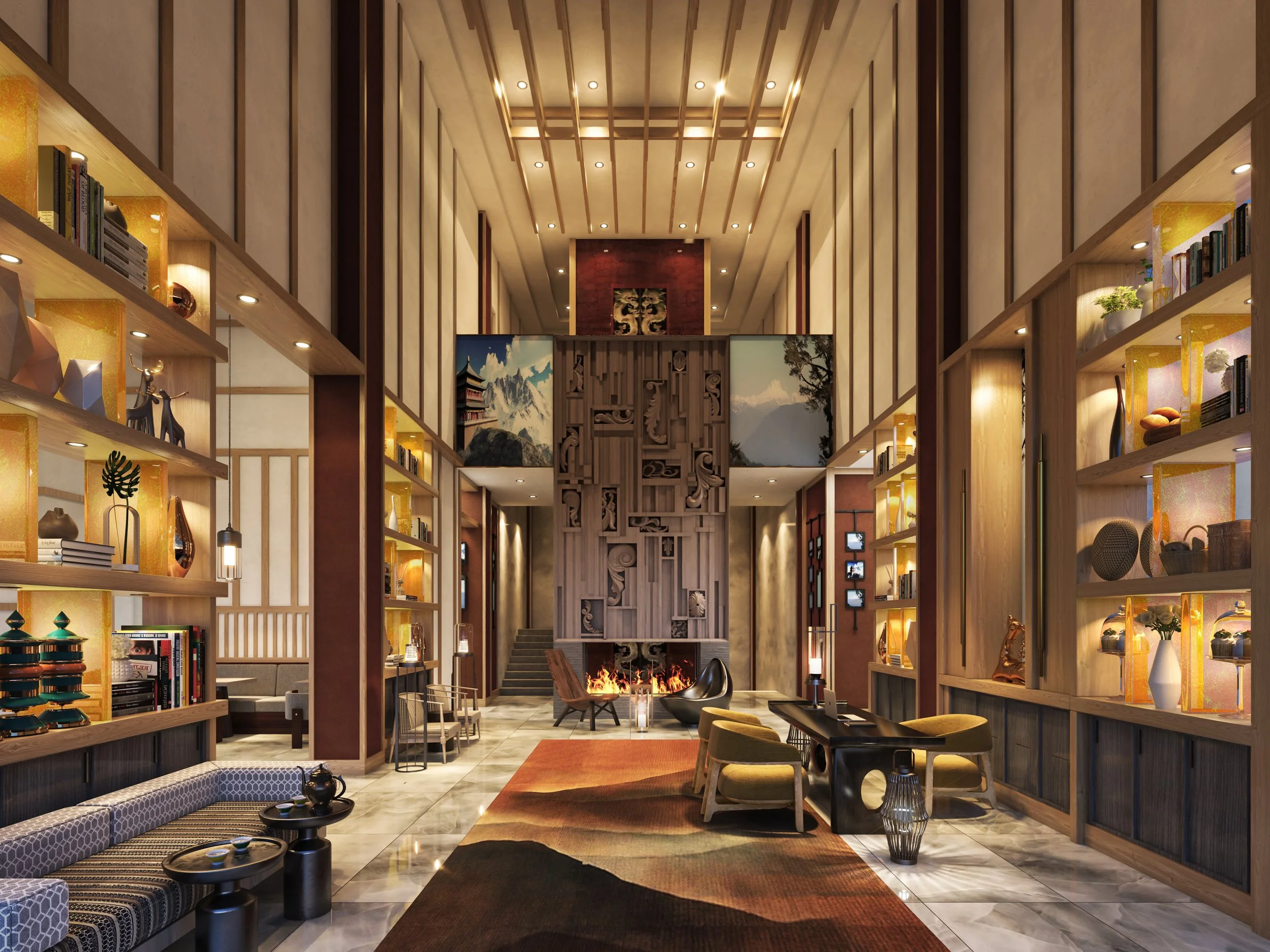
Luxury boutique hotel in Bhutan - Arrival Lobby
The experience clarified something I had gradually learned across continents: meaningful hospitality does not begin with style. It begins with curiosity. Before we design for a place, we must be willing to listen to it.
Designing the Dream
For more than 20 years, I have been fascinated by the possibility of designing experiences as choreographing guest experiences, as a filmmaker creates a movie.
Guests do not experience a hotel as a floor plan. They remember the anticipation before entering, the quality of light at the threshold, the sound of an unseen room, a moment of discovery, and the way a place changed how they felt. Architecture establishes the setting. Choreography creates the memory.
Recently, I was invited to design a performing arts theater for Wynn Al Marjan Resort in the United Arab Emirates. It felt like a project toward which my entire career had been quietly moving.
The theater brings together architecture and interiors, performance and illusion, storytelling and sensory immersion. Art Deco meets Moulin Rouge. It allows me to think simultaneously about space and time, audience and performer, anticipation and revelation. It is not simply a building. It will become an experience that could unfold differently in the imagination of every guest.
Perhaps that was what I had been searching for since my SCI-Arc thesis.
The Project I Cannot Yet Describe
And now, another dream is beginning to materialize.
I am working on a large futuristic confidential project in Las Vegas. An NDA prevents me from revealing its scope, program, or the experiences being created within it. Secrecy is a difficult condition for a storyteller. Yet perhaps, for the moment, it is appropriate. The project is still becoming.
What I can say is that it feels less like another commission than the convergence of my life in design.
It calls upon the architectural discipline I learned in Denmark, the human perspective I gained in Tanzania, the intellectual experimentation of Frankfurt and Como, the sensory choreography of my SCI-Arc thesis, the intensity of Los Angeles, the theatrical permission of Las Vegas, the cultural immersion of Asia, and the hospitality storytelling that defines Z LUXE Studio.
It requires me to think as an architect, interior designer, filmmaker, storyteller, and choreographer of human experience - not sequentially, but all at once. It reaches beyond individual spaces toward the creation of a complete world with its own emotional rhythm, its own moments of revelation, and its own capacity to transform the people who enter it.
Perhaps that is why it feels so personal. It does not belong to one chapter of my career. It requires all of them.
“It does not belong to one chapter of my career. It requires all of them”
For now, the details must remain hidden. But I recognize the feeling that has accompanied every meaningful turning point in my life: excitement mixed with uncertainty, impatience sharpened by curiosity, and the irresistible desire to discover what design can become next.
The Path We Never Imagine
My career has never followed a straight line. It has been shaped by curiosity, impatience, economic downturns, cultural encounters, unexpected invitations, difficult choices, and accidents that only later revealed themselves as opportunities.
I did not consciously plan to become a hospitality designer. I became one by following a series of questions: How can a place transform us? How can design awaken the senses? How does anticipation become emotion? How can an experience become a memory? And how can architecture tell a story people carry with them long after they leave?
The child in the old thatched house wanted to create something enduring. She could never have imagined Tanzania, Frankfurt, Los Angeles, Las Vegas, China, Singapore, Bangkok, Bhutan, the United Arab Emirates, or the confidential world now taking shape in Las Vegas.
Yet the desire beneath all of it has remained remarkably constant: to create places that matter, experiences that move people, and stories that endure.
“Dreams do come true - but rarely by following the path we first imagined”